
Acts of Faith Ministries · BlogPowered by ARB Ministries
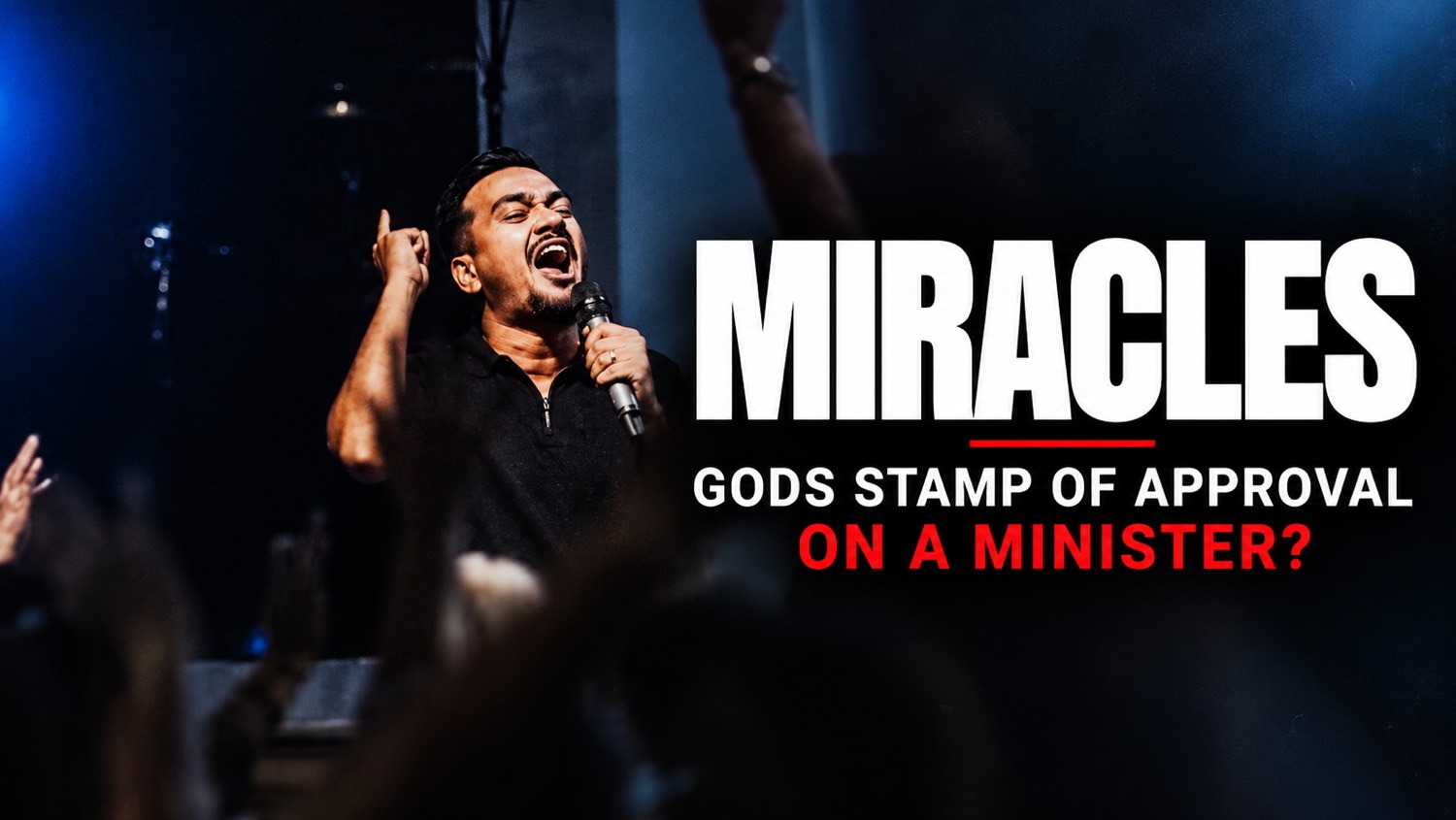
Miracles: God’s stamp of approval on a minister?
What the Bible says about signs, fruit, and discernment.
Ankit Rambabu Pinnadari
October 13, 2026
There’s a popular argument today: “Miracles don’t mean God approves of you.” Some even use it to explain away the absence of power in the church. But the Bible teaches the opposite. God uses miracles to put His stamp on His Son, His message, and His messengers. Scripture also teaches that power without relationship is dangerous.
So here is the balance: miracles confirm the message, and fruit confirms the minister. Miracles are heaven’s signature on the gospel. Fruit is heaven’s signature on the minister. God wants His church to carry both.
God endorsed Jesus through miracles
“Men of Israel, hear these words: Jesus of Nazareth, a Man attested by God to you by miracles, wonders, and signs which God did through Him in your midst, as you yourselves also know.”
Acts 2:22 (NKJV)
Peter preached this on the Day of Pentecost, appealing to what his hearers had seen. “Attested” (apodeiknymi) means to point out, show forth, exhibit, and demonstrate. The Amplified Bible captures the range: accredited, pointed out, shown forth, commended, and attested. God pointed at Jesus with miracles and said, “This is My Man!”
- Dynamis (miracles): the power side. It shakes the room.
- Teras (wonders): the astonishment side. People stop and stare.
- Sēmeion (signs): the meaning side. A sign points beyond itself to Jesus.
Jesus Himself said, “believe the works” (John 10:38), and John wrote that the signs “are written that you may believe” (John 20:31). Miracles forced a verdict and served faith in Jesus.
The apostles were confirmed by the same power
“God also bearing witness both with signs and wonders, with various miracles, and gifts of the Holy Spirit, according to His own will.”
Hebrews 2:4 (NKJV)
In Hebrews 2:3 the gospel “was confirmed to us.” Confirmed (bebaioō) means to make firm. It is the same word in Mark 16:20: “the Lord working with them and confirming the word through the accompanying signs.” Signs don’t replace the Word. They nail it down.
“Bearing witness” (synepimartyreō) means to unite in adding testimony. The preacher testifies, and God adds His own testimony on top. God co-signs the gospel, and the Holy Spirit distributes the gifts according to His own will.
What about Matthew 7? “I never knew you”
“Many will say to Me in that day, ‘Lord, Lord, have we not prophesied in Your name, cast out demons in Your name, and done many wonders in Your name?’ And then I will declare to them, ‘I never knew you; depart from Me, you who practice lawlessness!’”
Matthew 7:22-23 (NKJV)
Matthew 7 does not invalidate miracles. Jesus didn’t call their miracles fake. He said, “I never knew you.” Knew (ginōskō) means to know by acquaintance. He wasn’t saying, “I never heard of you.” He was saying, “We never had a relationship.”
The problem was power without relationship. They used His name without submitting to His lordship. Lawlessness (anomia) means contempt of law. They had the gifts and refused the government of God.
Acts 19 gives a picture of it. The sons of Sceva tried to use Jesus’ name without knowing Him, and the evil spirit answered, “Jesus I know, and Paul I know; but who are you?” (Acts 19:15). The name works for those who belong to the Name.
The stolen check
A stolen check is still a real check. The bank issued it, and its value is genuine. The fraud is in the person who misused it. God’s gifts are real too. Misuse doesn’t make the gift false. It exposes the heart of the one using it. Don’t throw out the check because a thief stole one.
“Miracles don’t mean God is with someone?” Here is the context
Some people point to gifted ministers who fell and conclude that miracles mean nothing. Scripture gives the context.
First, many start the right way but end up off course. “You ran well. Who hindered you from obeying the truth?” (Galatians 5:7). Balaam “loved the wages of unrighteousness” (2 Peter 2:15), yet “the Spirit of God came upon him” (Numbers 24:2). Even Paul disciplined his body lest he should become disqualified (1 Corinthians 9:27). Disqualified is adokimos: a coin that fails the test.
Second, the gifts and the calling of God are irrevocable (Romans 11:29), but read it right. Charisma is grace in a package, never a reward for merit. Irrevocable (ametamelētos) means God doesn’t take back what He gives on a whim. Paul wrote this about Israel (Romans 11:28). That explains why a gift can keep operating in a compromised life. It does not mean God approves of that life.
Third, grace will let you go so far and no further. Samson’s strength still worked the night he went to a harlot in Gaza (Judges 16:1-3). Then Delilah pressed him daily until he told her all his heart, the locks were shaved, and his strength left him. He said, “I will go out as before,” but he did not know that the Lord had departed from him (Judges 16:20). Departed is sûr, to be removed. The scariest part was not losing the power. It was not knowing it had lifted. The Philistines put out his eyes, bound him with bronze fetters, and he became a grinder in the prison. The Spirit departed from Saul too (1 Samuel 16:14). He prophesied once more (1 Samuel 19:23), but the kingdom was already gone.
Samson’s story doesn’t end in the prison. “However, the hair of his head began to grow again” (Judges 16:22). He prayed, “O Lord God, remember me, I pray! Strengthen me, I pray, just this once” (Judges 16:28). God answered, and the dead he killed at his death were more than he had killed in his life. Hebrews 11:32 lists him among the faithful. Mercy is not a license to sin. It cost Samson his eyes, his freedom, and his life. But mercy is available to those who return. David prayed, “do not take Your Holy Spirit from me” (Psalm 51:11).
Fourth, the gift is free, but carrying it costs. It can’t be bought (Acts 8:20). It is carried through surrender, consecration, prayer, and faithfulness. Fifth, pressure can turn ministry into performance. Ephesus kept the works but left its first love, and Jesus called it to repent and do the first works or lose its lampstand (Revelation 2:4-5).
Read Matthew 7 in context. Before it comes fruit (7:20). After it comes hearing and doing (7:24). Jesus judged them by doing His will, not by doing wonders. They worked miracles and worked lawlessness at the same time.
The bottom line: the anointed cannot keep living in sin and expect the grace never to lift. A gift may keep operating for a season, but it will eventually lift, because God’s approval does not stay on rebellion. And if you have fallen, return. The God who let Samson’s hair grow again still answers “remember me.” Stay low, stay clean, and stay in first love.
Miracles + fruit = God’s seal
Nicodemus admitted, “no one can do these signs that You do unless God is with him” (John 3:2). Signs say “God is with him.” But “by their fruits you will know them” (Matthew 7:20), and fruit comes from abiding in Him (John 15:5). Fruit says “he is with God.”
Fruit is what your life produces when no one is watching the platform: love, joy, peace, patience, kindness, goodness, faithfulness, gentleness, and self-control (Galatians 5:22-23). Without love, even mountain-moving faith is nothing (1 Corinthians 13:2).
- No miracles + good character = incomplete gospel, which drifts toward dead religion.
- Miracles + bad character = dangerous deception.
- Miracles + fruit = the biblical model.
Jesus appointed the Twelve “that they might be with Him” and then to have power to heal (Mark 3:14-15). Being with Him comes before having power.
Why this matters today
Some Christians hide behind Matthew 7 to excuse a lack of power: “Gifts don’t mean anything. It’s just about preaching.” But without power, the gospel is only half preached.
“And my speech and my preaching were not with persuasive words of human wisdom, but in demonstration of the Spirit and of power, that your faith should not be in the wisdom of men but in the power of God.”
1 Corinthians 2:4-5 (NKJV)
Demonstration (apodeixis) comes from the same family as apodeiknymi in Acts 2:22. Paul said he had fully preached the gospel in mighty signs and wonders, by the power of the Spirit of God (Romans 15:19). “For the kingdom of God is not in word but in power” (1 Corinthians 4:20).
Nobody wants a surgeon who can only lecture. What’s the point of a hospital that can’t treat the sick, or a church that can’t set captives free? God anointed Jesus with the Holy Spirit and with power, who went about doing good and healing all who were oppressed by the devil (Acts 10:38).
Five tests for discerning true miracles
We test the supernatural. We don’t fear it or quench it. “Do not quench the Spirit. Do not despise prophecies. Test all things; hold fast what is good” (1 Thessalonians 5:19-21).
- The Jesus test. Does it point to Jesus and glorify Him? (John 16:14; Acts 3:12, 16)
- The Word test. Does it agree with Scripture? A sign never overrules Scripture (Isaiah 8:20; Deuteronomy 13:1-4).
- The Fruit test. Does it bear good fruit? (Matthew 7:20)
- The Love-and-Obedience test. Does it draw people closer to the Lord? (Deuteronomy 13:3-4)
- The Spirit test. Does the Holy Spirit within you bear witness? (1 John 2:27; 1 Corinthians 12:10)
There are two ditches: gullibility, believing every claim (1 John 4:1), and cynicism, rejecting all claims. The road between them is “Test all things; hold fast what is good.”
Pray for boldness and power
“Now, Lord, look on their threats, and grant to Your servants that with all boldness they may speak Your word, by stretching out Your hand to heal, and that signs and wonders may be done through the name of Your holy Servant Jesus.”
Acts 4:29-30 (NKJV)
Notice the order: the Word comes first, power confirms it, and Jesus gets the glory. And “rejoice because your names are written in heaven” (Luke 10:20). “Deep calls unto deep” (Psalm 42:7). Ask, because the Father gives the Holy Spirit to those who ask Him (Luke 11:13).
Lord, let my life carry both the power of the Holy Spirit and the character of Christ. May miracles confirm Your Word through me, and may my heart remain fully surrendered to You.
Ankit Rambabu Pinnadari · Acts of Faith Ministries
Scripture quotations are taken from the New King James Version, the New Living Translation, and the Amplified Bible, Classic Edition, as noted.